

Investors back B2B AI SaaS companies that pair real business value with a durable technical moat and disciplined economics. Use this guide as a checklist to package your story clearly and credibly.
The Investment Landscape
AI is changing how software is discovered, adopted, and priced. But despite the hype cycle, investor discipline hasn’t changed: they still look for recurring revenue, efficient growth, sticky products, and defensible advantages. AI is a force multiplier, not a substitute for fundamentals.
Winning teams show two things early: a painful, quantifiable problem and proof that AI meaningfully improves outcomes. Everything else—valuations, buzz, fancy demos—comes second.
Foundational Criteria
1) Market Opportunity & Problem Clarity
- Pain with urgency: Anchor the product to a business-critical problem (compliance delays, errors, fraud, revenue leakage, operational bottlenecks).
- Calibrated TAM: Size the Total Addressable Market realistically. Add SOM (serviceable obtainable market) for near-term focus.
- ICP and wedge: Name the buyers and users. Start with one high-impact workflow and expand outward.
- Vertical vs. horizontal: Vertical AI SaaS wins on depth and domain data. Horizontal tools must prove broad applicability and best-in-class integration.
2) Product–Market Fit Signals
- Referenceable value: Measurable ROI in pilots (time saved, error reduction, cost down, revenue up). Keep before/after baselines simple and credible.
- Early retention: Even at small scale, watch repeat usage, multi-seat adoption, and expansion into adjacent tasks.
- Fast iteration: AI products improve through tight feedback loops. Show a cadence of shipping, evaluating, and hardening.
Technical & Product Evaluation
3) Core AI Strategy & Moat
- Data advantage: Proprietary, compounding data access is the most durable moat. Explain how you collect, clean, label, and govern it.
- Model strategy: Be explicit about build vs. fine-tune vs. compose. Provide evaluation results and guardrails for known failure modes.
- Explainability & compliance: Buyers need auditability. Outline bias checks, logging, and alignment with security standards.
- Continuous learning: Describe how performance improves safely over time (feedback capture, active learning, human review).
4) Enterprise-Ready Product
- Integration-first: Meet customers where they work (CRM, ERP, ticketing, data warehouses). Less behavior change = faster adoption.
- Security basics: SSO/SCIM, RBAC, audit logs, data residency, and clear data handling policies. These are table stakes for larger deals.
- Performance SLOs: State latency and accuracy targets. Show a status page mentality: transparent, reliable, responsive.
Business Model & Revenue Metrics
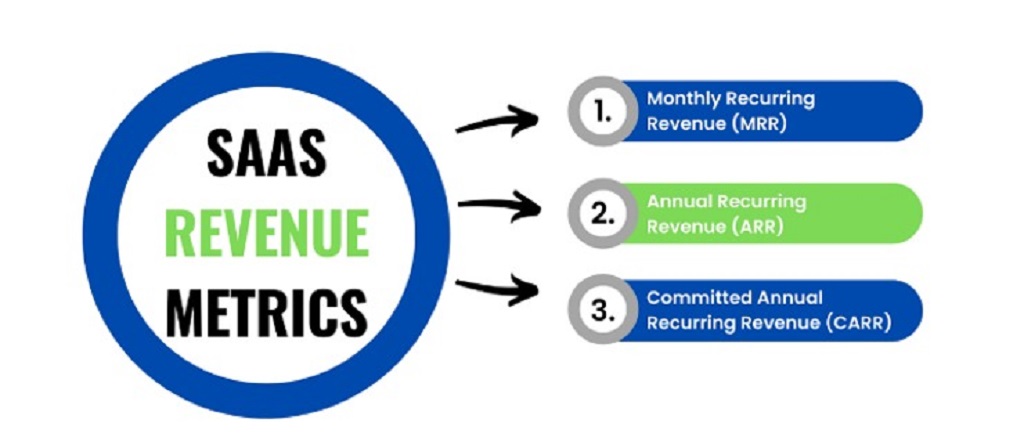
5) Recurring Revenue & Unit Economics
AI does not excuse poor unit economics. Investors want trajectory and a plan to improve margins as you scale.
| Metric | Investor Focus | Practical Levers |
|---|---|---|
| ARR / MRR | Predictable, recurring revenue with pipeline visibility. | Annual contracts, value-led pilots, expansion into new use cases. |
| Gross Margin | Healthy software margins despite inference costs. | Model routing, caching, batching, token budgets, right-sizing inference. |
| CAC Payback | Efficiency of acquiring a dollar of ARR. | Tight ICP, PLG assists, shorter security reviews, high-velocity SKUs. |
| Churn / NDR | Durability and expansion within accounts. | Deeper integrations, multi-user workflows, admin analytics. |
| Usage–Revenue Fit | Pricing scales with realized value. | Hybrid seat + usage tiers, budget caps, outcome-linked tiers. |
6) Pricing & Packaging
- Seat vs. usage vs. hybrid: Many AI SaaS products benefit from hybrid pricing: predictable access + variable compute features.
- Simple value metric: Choose a metric customers already track (documents processed, tasks completed, records enriched).
- Guardrails: Cost dashboards, hard/soft limits, and alerts. Eliminate billing surprises to build trust.
7) GTM Motion
| Motion | When It Works | Strength | Watchouts |
|---|---|---|---|
| PLG | Users see value fast, self-serve onboarding. | Low CAC, viral loops. | Can stall without enterprise features and sales assist. |
| Enterprise-led | Complex workflows, compliance, multi-stakeholder buys. | High ACV, deep integration. | Long cycles, heavy proofs and enablement. |
| Hybrid | Bottom-up discovery with top-down standardization. | Best of both worlds. | Requires excellent data handoffs and ops. |
Moat & Defensibility
8) What Actually Defends the Castle
- Proprietary data flywheel: Your product captures unique, compounding data streams that improve quality.
- Workflow depth: Be the operating layer for a critical process. Switching costs rise with every integration and artifact created.
- Systems know-how: Hard-won playbooks for prompts, fine-tuning, eval harnesses, and safety. This is institutional knowledge, not just code.
- Ecosystem position: Partnerships with clouds, ISVs, and SIs that generate predictable demand and integration barriers.
Team & Execution
9) Founder–Market Fit & Operating Cadence
- Domain + technical credibility: Speak the customer’s language and the model’s language.
- Hiring leverage: Ability to attract AI/ML and platform talent. Show early engineers and advisors with relevant depth.
- Cadence and clarity: Short roadmaps, weekly metrics, fast postmortems, crisp prioritization. Execution beats theory.
Risk Factors to Address Upfront
10) What Investors Will Ask (So Answer First)
- Regulatory & ethical risk: Data provenance, consent, and fair use. Have DPIAs where appropriate and clear human oversight for high-stakes actions.
- Vendor concentration: Avoid reliance on a single model or data supplier. Use abstraction layers and multi-provider routing.
- Model reliability: Hallucinations, drift, adversarial inputs. Show evaluation, red teaming, and rollback plans.
- Macro sensitivity: If budgets tighten, will your product be cut? Tie value to core business outcomes, not nice-to-haves.
Where Smart Money Is Moving
11) Near-Term Themes
- Agentic workflows: Systems that plan, act, and verify across tools with strong controls.
- Vertical AI platforms: Deep solutions in finance, healthcare, legal, industrial, where data and process expertise compound.
- AI safety & governance: Evaluation, observability, security, and compliance tools for production AI.
- Human-in-the-loop scale: Blending automation with expert review to ensure quality and trust.
Packaging Your Story
12) Narrative → Proof → Discipline → Roadmap
- Narrative: Painful problem → differentiated solution → compounding moat (data, workflow depth, ecosystem).
- Proof: Short case studies with plain numbers and named roles (e.g., “Risk Ops cut review time 62%”).
- Discipline: Show unit economics, pricing logic, and a path to margin improvement.
- Roadmap: 12–18 months mapped to commercial milestones (features → use cases → SKUs → revenue).
Founder Checklist
- We articulate a specific business outcome improvement with a simple baseline.
- We have at least three referenceable customers showing measurable ROI.
- Our data advantage compounds with usage and is governed responsibly.
- Our pricing aligns with value and includes caps and cost visibility.
- Our architecture passes enterprise security basics and audits.
- We have a credible plan to improve gross margins as we scale.
- We run a rigorous evaluation & safety program for models in production.
Compact One-Slide Summary (Text-Only)
- Who we solve for: ICP, job titles, industry context.
- Why now: Pain + urgency + AI unlock.
- What we do: One-sentence product and workflow.
- Proof: 2–3 ROI stats with logos or anonymized references.
- Moat: Proprietary data, workflow depth, partnerships.
- Economics: Pricing model, payback, margin path.
- Plan: 3–5 concrete milestones over 12 months.
Related Topic: Aligning Video Content with Marketing
Popular FAQs
What ARR do investors expect before investing in a B2B AI SaaS startup?
It depends on stage and traction quality. Pre-seed and seed can raise with credible pilots, referenceable ROI, and sticky usage. By Series A, expect scrutiny on repeatability: consistent logo retention, expanding cohorts, and a path to several million in ARR within 12–18 months. Efficiency and expansion often matter more than a single ARR threshold.
How important is proprietary data compared to model innovation?
Proprietary data is usually more durable. Models and infra evolve quickly; rights to high-quality, use-case-specific data—plus pipelines for cleaning, labeling, and governance—compound over time. Show how your data flywheel strengthens with every customer.
What valuation multiples are common for early-stage AI SaaS?
Multiples move with market conditions and quality of revenue. Rather than chase a number, optimize the inputs: growth with efficiency, improving gross margins, low churn, and a clear moat. When these are strong, valuation typically follows.
Should we lead with PLG or enterprise sales?
Match the motion to adoption dynamics. If users can reach value in minutes, PLG can drive efficient tops of funnel. If the value requires deep integrations and security reviews, an enterprise-led motion is better. Many teams blend both: PLG for discovery, sales for standardization and scale.
How do investors judge AI defensibility at pre-seed vs. Series A?
Pre-seed: credible path to defensibility—unique data access, domain expertise, and a pragmatic eval and safety plan. Series A: concrete evidence—compounding datasets, measurable performance advantages, and integration depth that competitors struggle to replicate.
How can we manage inference costs without hurting accuracy?
Use model routing (cheap for easy tasks, premium for hard ones), response caching, batching, prompt and context optimization, and right-sized models. Track a blended “cost per successful task” and report it alongside accuracy and latency.
What security and compliance signals speed up enterprise sales?
SSO/SCIM, RBAC, audit logs, data residency options, incident response runbooks, and clear data handling policies. Communicate them in a short security one-pager and keep your answers consistent across questionnaires.
How do we prove ROI fast in early pilots?
Pick one painful workflow, define a simple baseline, run for 30–45 days, and measure before/after. Report one primary outcome (e.g., “review time down 58%”) plus one secondary (e.g., “error rate down 24%”). Ask for a reference if targets are hit.
Conclusion
AI amplifies strong SaaS businesses. Focus the narrative on a painful problem, demonstrate measurable ROI, and show how your data, workflows, and partnerships harden into a moat. Pair technical excellence with commercial discipline, and you’ll give investors what they need most: confidence that your advantage compounds with every new customer.