
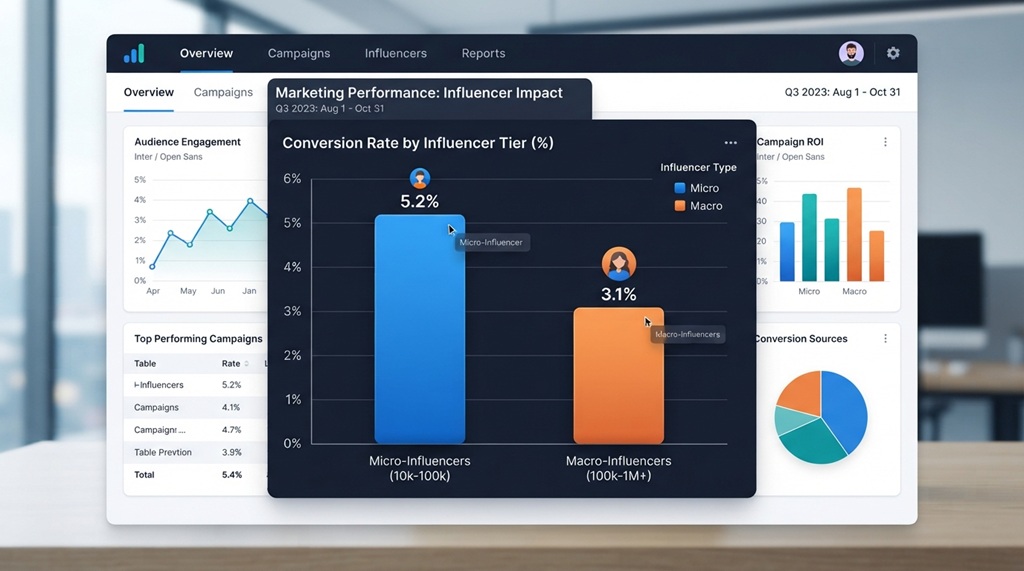
Micro influencers often beat celebrities and macro influencers on conversion rate. They have smaller audiences, but those audiences trust them more. That trust turns into clicks, sign-ups, and sales.
This doesn’t mean bigger is always worse. Reach still matters for brand awareness. But if your goal is conversions, not just visibility, micro influencers usually win.
Below, we break down why this happens, when it doesn’t apply, and how to run a campaign that actually converts.
What Counts as a Micro Influencer
A micro influencer typically has between 10,000 and 100,000 followers. This range sits between nano influencers (under 10,000) and macro influencers (100,000 to 1 million).
The follower count is only part of the picture. What really defines a micro influencer is their relationship with their audience. They usually:
- Reply to comments and DMs personally
- Post in one clear niche (fitness, skincare, finance, etc.)
- Build their following through consistency, not virality
- Feel more like a peer than a celebrity
This closeness is the reason they convert well. Their followers see them as a trusted friend, not a distant public figure.
Why Smaller Audiences Convert at Higher Rates
Smaller audiences convert better because trust and relevance scale down more easily than they scale up. A creator with 20,000 followers can know their audience deeply. A creator with 2 million cannot.
Trust Plays a Bigger Role Than Reach
People buy from voices they trust. Micro influencers build that trust over time through niche-specific content. Their followers already share similar interests, so recommendations feel relevant, not random.
According to industry experts, engagement rates tend to drop as follower counts rise. Fewer followers often means each post gets more comments, likes, and shares relative to audience size. Higher engagement is a strong signal of active, attentive followers, and attentive followers are more likely to act on a recommendation.
Audiences Are More Niche and Qualified
A macro influencer’s audience is broad. It includes casual followers, competitors, and people who followed for one viral post. A micro influencer’s audience is narrower and more intentional.
If a skincare micro influencer promotes a serum, most of her followers already care about skincare. That audience alignment means less wasted ad spend and more qualified leads.
The Content Feels Less Like an Ad
Micro influencers usually create content that fits naturally into their normal posting style. A macro influencer’s sponsored post often stands out as clearly paid. A micro influencer’s post can blend in, which makes it feel more like a genuine recommendation.
When Macro or Celebrity Influencers Still Make Sense
Micro influencers aren’t the right choice for every campaign. Sometimes a bigger name delivers better results.
Use macro or celebrity influencers when your goal is:
- Fast, broad brand awareness – Launching a new product nationally needs reach, not just trust.
- Prestige positioning – Luxury or aspirational brands sometimes need the visibility a big name provides.
- One-time cultural moments – A viral trend or major event may call for maximum exposure quickly.
In these cases, conversion rate matters less than total reach. You’re paying for visibility, not necessarily for direct sales.
How to Select High-Converting Micro-Influencers
Follower count is a vanity metric; true conversion power lies in audience trust and active engagement. Rather than casting a wide net, brands must evaluate micro-influencers through performance-driven criteria to ensure every partnership translates into measurable sales. By prioritizing audience alignment, authentic engagement, and historical campaign efficacy or, as explored in our guide on which influencer marketing metrics matter for ROI? you can systematically filter out passive reach and cultivate high-converting partnerships that deliver a strong return on investment.
Check Engagement Quality, Not Just Numbers
Look past likes and follower counts. Read the comments. Are people asking genuine questions? Are they tagging friends? Or are the comments generic (“nice pic!”, emoji-only)?
Real engagement looks specific. Fake or low-quality engagement looks repetitive and shallow.
Confirm Audience-Brand Fit
The influencer’s audience should match your target customer, not just their content topic. A fitness influencer with a mostly male audience won’t convert well for a women’s activewear brand, even if the niche looks related on the surface.
Ask for audience demographics before you commit. Most influencers can share this from their platform analytics.
Test with a Small Campaign First
Instead of committing your full budget to one influencer, test with three to five smaller creators. Compare their conversion rates directly. This gives you real data instead of guesses, and it protects your budget from a single bad fit.
A Smarter Way to Measure Micro Influencer ROI
Most brands only track clicks or follower growth. That’s a mistake. Clicks don’t pay bills conversions do.
Here’s an angle most guides skip: track conversion rate per 1,000 followers, not just total conversions. This levels the playing field between influencers of different sizes.
For example:
- Influencer A: 50,000 followers, 100 conversions = 2 conversions per 1,000 followers
- Influencer B: 500,000 followers, 300 conversions = 0.6 conversions per 1,000 followers
Influencer A looks smaller on paper. But her audience converts more than three times better. If you scaled her reach to match Influencer B’s size, she would likely outperform by a wide margin.
Use this metric when comparing influencers of different sizes. It shows you who actually moves your audience to action, not just who has the biggest following.
Common Mistakes Brands Make with Micro Influencer Campaigns
Even a good strategy can fail with the wrong execution. These mistakes show up often.
Over-Scripting the Content
Handing an influencer a rigid script kills the authenticity that makes them effective in the first place. Give clear guidelines, not a word-for-word script. Let them use their own voice.
Ignoring Long-Term Relationships
One-off posts convert less than ongoing partnerships. Followers trust repeated recommendations more than a single sponsored post. Consider retainer-style deals with your best-performing micro influencers.
Skipping a Clear Call-to-Action
Even a highly trusted recommendation needs a next step. Always give the influencer a specific, trackable link or discount code. Vague product mentions rarely convert as well as direct instructions.
Frequently Asked Questions
Do micro influencers really convert better than macro influencers?
In many cases, yes. Their smaller, more engaged audiences trust their recommendations more directly, which often leads to higher conversion rates per follower. Results still vary by niche, product, and campaign quality.
How many followers should a micro influencer have?
Most industry definitions place micro influencers between 10,000 and 100,000 followers. This range balances a meaningful audience size with the personal, trust-based connection that drives conversions.
Is it cheaper to work with micro influencers?
Usually, yes. Micro influencers typically charge less per post than macro or celebrity influencers, which means brands often get a better cost-per-conversion even with smaller total reach.
Can I combine micro and macro influencers in one campaign?
Yes, and many successful campaigns do this. Macro influencers build broad awareness, while micro influencers drive the trust and conversions that turn that awareness into sales.
How do I track if a micro influencer is actually driving sales?
Use unique discount codes, trackable affiliate links, or UTM parameters for each influencer. This lets you measure conversions directly instead of relying on vague engagement metrics.
Final Thoughts
Micro influencers often deliver higher conversion rates because their audiences trust them more, engage more, and feel like they’re getting advice from a peer. That said, they’re not automatically the right fit for every campaign.
If your goal is direct conversions, sales, or sign-ups, micro influencers deserve serious consideration. If your goal is broad brand awareness, macro or celebrity influencers may still serve you better.
The smartest approach often blends both, using macro influencers for reach and micro influencers for the trust that actually closes the sale.