
In 2026, the digital landscape is more competitive than ever, and businesses that fail to adapt risk falling behind. A viral digital marketing strategy is no longer a luxury—it’s a necessity for brands looking to cut through the noise and capture audience attention. With over 4.9 billion social media users worldwide and Google processing over 8.5 billion searches daily, the opportunity to reach a massive audience has never been greater. However, virality doesn’t happen by accident. It requires a deep understanding of your audience, a data-driven approach, and a willingness to experiment with emerging trends. This guide will walk you through the essential steps to craft a digital marketing strategy that not only engages but also converts, leveraging the power of SEO, social media growth, and branding to create a lasting impact.
Why a Viral Digital Marketing Strategy Matters in 2026
The digital marketing landscape in 2026 is defined by rapid change and increasing competition. Consumers are bombarded with thousands of messages daily, making it harder than ever to stand out. A viral digital marketing strategy helps brands break through the clutter by creating content that resonates deeply with their audience. According to HubSpot, 80% of consumers are more likely to purchase from a brand that provides personalized experiences. Additionally, the rise of short-form video, interactive content, and AI-driven personalization has transformed how brands engage with their audiences. Virality isn’t just about reach—it’s about creating meaningful connections that drive loyalty, trust, and conversions. By focusing on authenticity, relevance, and shareability, brands can turn their digital marketing efforts into a powerful growth engine.
Step 1: Define Your Goals and Audience
Every successful digital marketing strategy starts with clear goals and a deep understanding of your audience. Begin by identifying what you want to achieve. Are you looking to increase brand awareness, generate leads, drive sales, or build a community? Your goals will shape every aspect of your strategy, from the platforms you choose to the type of content you create. Next, define your target audience. Who are they? What are their pain points, interests, and behaviors? Use tools like Google Analytics, social media insights, and customer surveys to gather data and create detailed buyer personas. Additionally, consider the customer journey—how do your audience members discover, engage with, and ultimately convert into customers? By aligning your goals with your audience’s needs, you can create a digital marketing strategy that resonates and delivers results.
Step 2: Leverage the Power of SEO
SEO remains a cornerstone of any effective digital marketing strategy. In 2026, search engines are smarter than ever, prioritizing content that provides real value to users. Start by conducting keyword research to identify the terms and phrases your audience is searching for. Tools like Ahrefs, SEMrush, and Google Keyword Planner can help you uncover high-potential keywords with low competition. Additionally, focus on creating high-quality, informative content that addresses your audience’s questions and pain points. Optimize your content for both users and search engines by incorporating keywords naturally, using descriptive headings, and ensuring fast loading times. Don’t forget the importance of technical SEO, such as mobile-friendliness, secure hosting, and structured data, which help search engines understand and rank your content. Finally, build high-quality backlinks from reputable sites to boost your domain authority and improve your search rankings.
Step 3: Master Social Media Growth
Social media is a powerful tool for amplifying your digital marketing strategy and driving virality. In 2026, platforms like TikTok, Instagram, and LinkedIn continue to dominate, but the key to success lies in choosing the right channels for your audience. Start by identifying where your target audience spends their time and focus your efforts there. For example, if you’re targeting Gen Z, TikTok and Instagram Reels should be a priority. If your audience is B2B professionals, LinkedIn and Twitter may be more effective. Additionally, leverage the power of short-form video, which is projected to account for 80% of all internet traffic by 2026. Create engaging, authentic content that tells a story, solves a problem, or entertains. Use hashtags, collaborations, and user-generated content to increase your reach and engagement. Finally, don’t underestimate the power of community building. Engage with your audience, respond to comments, and foster a sense of belonging around your brand.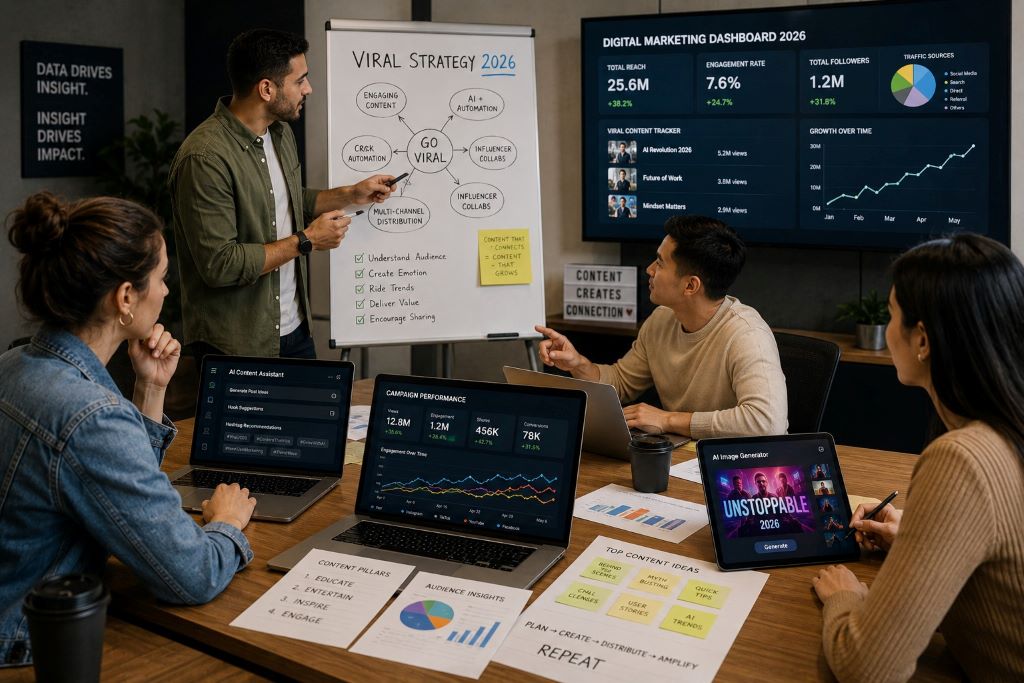
Step 4: Build a Strong Brand Identity
A strong brand identity is the foundation of a viral digital marketing strategy. Your brand is more than just a logo or color scheme—it’s the emotional connection your audience has with your business. Start by defining your brand’s mission, values, and personality. What do you stand for? What makes you unique? Use these elements to create a consistent and recognizable brand voice across all your marketing channels. Additionally, invest in high-quality visuals, including logos, graphics, and videos, that reflect your brand’s identity. Consistency is key—ensure that your branding is cohesive across your website, social media, email marketing, and other touchpoints. A strong brand identity not only helps you stand out in a crowded market but also builds trust and loyalty with your audience.
Step 5: Create Shareable, High-Quality Content
Content is the heart of any digital marketing strategy. In 2026, the most successful brands are those that create content that is not only high-quality but also shareable. Start by identifying the types of content that resonate with your audience. This could include blog posts, videos, infographics, podcasts, or interactive quizzes. Focus on creating content that provides value, whether it’s educational, entertaining, or inspiring. Additionally, make it easy for your audience to share your content by including social sharing buttons, embeddable links, and clear calls to action. Don’t be afraid to experiment with different formats and styles to see what works best. Finally, repurpose your content across multiple platforms to maximize its reach and lifespan. For example, turn a blog post into a video, an infographic, and a series of social media posts.
Step 6: Harness the Power of Influencer Marketing
Influencer marketing continues to be a powerful tool for amplifying your digital marketing strategy. In 2026, consumers trust recommendations from influencers almost as much as they trust recommendations from friends and family. Start by identifying influencers in your niche who align with your brand values and have an engaged audience. Micro-influencers, who typically have between 10,000 and 100,000 followers, often provide the best ROI, as they tend to have higher engagement rates and more authentic connections with their audiences. Collaborate with influencers to create sponsored content, product reviews, or giveaways that promote your brand. Additionally, consider leveraging user-generated content by encouraging your audience to share their own experiences with your products or services. This not only increases your reach but also builds social proof and trust.
Step 7: Analyze, Optimize, and Repeat
A viral digital marketing strategy is not a one-time effort—it requires continuous analysis and optimization. Start by tracking key performance metrics, such as website traffic, engagement rates, conversion rates, and ROI. Tools like Google Analytics, social media insights, and marketing automation platforms can provide valuable data and insights. Use this data to identify what’s working and what’s not, and make data-driven decisions to optimize your strategy. Additionally, stay up to date with the latest trends and best practices in digital marketing. The landscape is constantly evolving, and what works today may not work tomorrow. Finally, don’t be afraid to experiment and take risks. Virality often comes from unexpected places, so stay open to new ideas and opportunities.
Expert Tips for Building a Viral Digital Marketing Strategy
- Focus on Storytelling: People connect with stories, not sales pitches. Use storytelling to create emotional connections with your audience and make your brand more relatable.
- Leverage User-Generated Content: Encourage your audience to create and share content related to your brand. This not only increases engagement but also builds trust and authenticity.
- Optimize for Mobile: With over 60% of internet traffic coming from mobile devices, it’s essential to ensure that your website and content are mobile-friendly.
- Use Data to Drive Decisions: Base your marketing decisions on data, not guesswork. Use analytics tools to track performance and identify areas for improvement.
- Stay Authentic: Authenticity is key to building trust and loyalty with your audience. Be transparent, honest, and true to your brand values in all your marketing efforts.
Real-Life Examples of Viral Digital Marketing Strategies
Dove’s Real Beauty Campaign: Dove’s Real Beauty campaign is a prime example of a viral digital marketing strategy that resonated deeply with its audience. By challenging beauty stereotypes and promoting body positivity, Dove created a movement that generated millions of shares, likes, and comments across social media. The campaign not only boosted brand awareness but also strengthened Dove’s reputation as a brand that stands for authenticity and inclusivity.
Old Spice’s The Man Your Man Could Smell Like: Old Spice’s viral video campaign, featuring the charismatic Isaiah Mustafa, became a cultural phenomenon. The campaign’s humor, creativity, and shareability helped Old Spice reach a new generation of consumers and revitalize its brand image. The videos generated millions of views and sparked countless parodies and memes, further amplifying their reach.
Airbnb’s User-Generated Content Strategy: Airbnb has mastered the art of leveraging user-generated content to build trust and drive bookings. By encouraging guests and hosts to share their experiences on social media, Airbnb has created a vast library of authentic, engaging content that showcases the unique value of its platform. This strategy has not only increased brand awareness but also driven conversions and loyalty.
Reviews of Top Digital Marketing Tools
HubSpot: HubSpot is an all-in-one marketing platform that offers tools for SEO, social media, email marketing, and more. Its user-friendly interface, extensive integrations, and powerful analytics make it a top choice for businesses of all sizes.
Canva: Canva is a graphic design tool that simplifies the creation of professional visuals for social media, blogs, and other marketing materials. Its drag-and-drop interface and extensive library of templates and assets make it ideal for non-designers.
Hootsuite: Hootsuite is a social media management platform that allows you to schedule posts, engage with your audience, and track performance across multiple channels. Its robust features and user-friendly dashboard make it a favorite among social media managers.
FAQs About Building a Viral Digital Marketing Strategy
How do I create a viral marketing campaign?
Creating a viral marketing campaign requires a deep understanding of your audience, a compelling and shareable message, and a multi-channel approach. Focus on creating content that evokes emotion, provides value, or sparks conversation. Leverage social media, influencers, and user-generated content to amplify your reach.
What are the best platforms for digital marketing in 2026?
The best platforms for digital marketing in 2026 depend on your audience and goals. Social media platforms like TikTok, Instagram, and LinkedIn are powerful for engagement and brand building. Google and Bing are essential for SEO and search advertising. Email marketing platforms like Mailchimp and Constant Contact are great for nurturing leads and driving conversions.
How do I measure the success of my digital marketing strategy?
Measure the success of your digital marketing strategy by tracking key performance indicators (KPIs) such as website traffic, engagement rates, conversion rates, and ROI. Use tools like Google Analytics, social media insights, and marketing automation platforms to gather data and insights.
What is the role of SEO in digital marketing?
SEO plays a crucial role in digital marketing by improving your website’s visibility and ranking on search engines. By optimizing your content for relevant keywords, building high-quality backlinks, and ensuring a positive user experience, you can attract more organic traffic and generate leads and sales.
How do I build a strong brand identity?
Building a strong brand identity involves defining your brand’s mission, values, and personality, and consistently reflecting these elements across all your marketing channels. Invest in high-quality visuals and messaging that resonate with your audience and differentiate your brand from competitors.
Conclusion
Building a viral digital marketing strategy in 2026 requires a combination of creativity, data-driven decision-making, and a deep understanding of your audience. By defining clear goals, leveraging the power of SEO and social media growth, and creating shareable, high-quality content, you can create a strategy that not only engages but also converts. Remember, virality is not just about reach—it’s about creating meaningful connections that drive loyalty, trust, and long-term success. Stay authentic, stay adaptable, and always keep your audience at the heart of your efforts. The digital marketing landscape is constantly evolving, but by focusing on the fundamentals and embracing innovation, you can build a strategy that stands the test of time.
Call to Action
Ready to take your digital marketing to the next level? Start by defining your goals and audience, and then experiment with the tactics and tools outlined in this guide. Track your performance, optimize your strategy, and don’t be afraid to take risks. Share your experiences and insights in the comments below—let’s build a community of marketers who are pushing the boundaries of what’s possible. The world of digital marketing is waiting, and there’s no better time to start than now!
Featured Image Source