
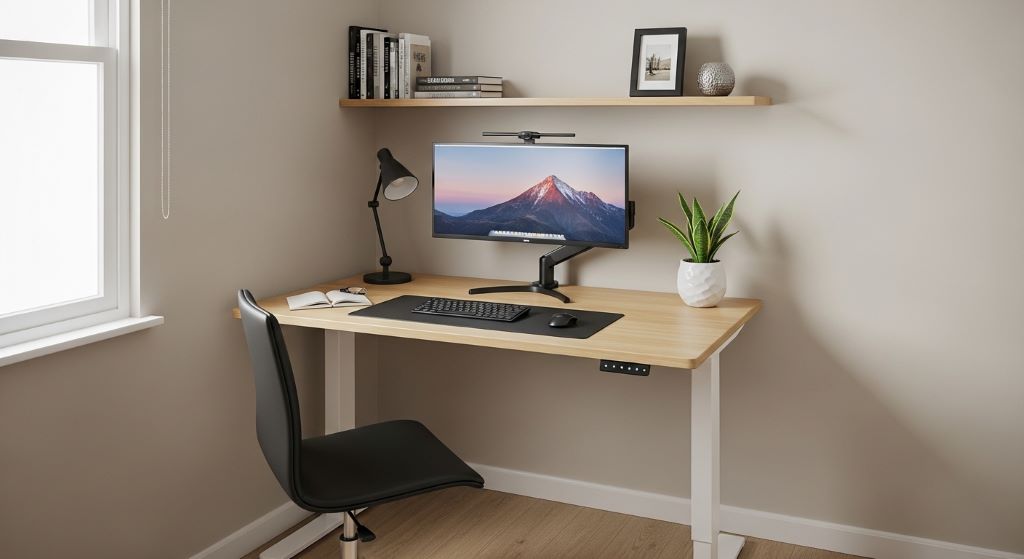
Working from home is now common. However, not everyone has a large room for a full office setup. Many people work from a corner, a bedroom, or even a shared space. Therefore, choosing the right desk becomes very important.
A small standing desk can improve comfort and productivity. It helps you switch between sitting and standing. This reduces fatigue and supports better posture. However, not all desks fit small spaces well. You need a smart solution that balances size, function, and comfort.
In this guide, you will learn how to choose the right desk for tight spaces. You will also understand key features, design tips, and common mistakes to avoid.
Understanding Your Space First
Before buying any desk, measure your space. This step is simple but often ignored. However, it can save you from buying the wrong product.
Start by measuring the width, depth, and height of your available area. Also, check nearby walls, doors, and windows. You need enough clearance to move comfortably.
Additionally, think about how you use the space. Do you need room for a chair? Will you stand often? These questions help narrow your options.
If your space is very tight, consider corners or unused wall areas. These spots often work well for a space saving desk.
Why a Small Standing Desk is a Smart Choice
A standing desk offers flexibility. You can work while sitting or standing. This helps reduce back pain and improves energy levels.
Moreover, small desks are easier to place. They fit in apartments, dorms, and shared rooms. Therefore, they are ideal for modern living.
A compact sit stand desk is especially useful if you switch positions often. It gives you ergonomic benefits without taking much room.
Key Features to Look For
Size and Dimensions
Choose a desk that fits your space without crowding it. A width of 30 to 40 inches is often enough for a laptop setup. However, if you use multiple monitors, you may need a bit more space.
Depth is also important. A shallow desk works well for small rooms. However, make sure it still holds your essentials.
Adjustable Height Range
The height range should match your body. When standing, your elbows should be at a 90-degree angle. When sitting, your feet should rest flat on the floor.
Additionally, check if the adjustment is smooth. This ensures easy transitions throughout the day.
Manual vs Electric Adjustment
Manual desks use a crank or lever. They are cheaper and lighter. However, they require effort to adjust.
Electric desks use a motor. They are easier to adjust with a button. However, they cost more and need a power source.
Weight Capacity
Always check how much weight the desk can hold. Include your monitor, laptop, keyboard, and other items.
A strong desk will last longer and stay stable. Therefore, do not ignore this feature.
Stability and Build Quality
A desk should not wobble. Look for solid frames and quality materials. Steel frames are often more stable than plastic ones.
Additionally, read reviews to check real user experiences.
Types of Small Standing Desks
Wall-Mounted Desks
These desks attach to the wall. They save floor space and look clean. However, installation may require drilling.
Converter Desks
These sit on top of an existing desk. You can raise or lower them as needed. Therefore, they are a budget-friendly option.
Foldable Desks
Foldable desks are easy to store. You can move them when not in use. However, they may not be as sturdy as fixed desks.
Corner Desks
Corner desks fit into unused areas. They maximize space and provide more surface area.

Design Tips for Small Spaces
Use Vertical Space
Install shelves above your desk. This keeps your workspace organized without using extra floor space.
Choose Light Colors
Light colors make a room feel bigger. Therefore, pick desks in white or light wood finishes.
Keep It Minimal
Avoid clutter. Use only what you need. Additionally, use cable organizers to keep things tidy.
Multi-Functional Furniture
Choose desks with storage. Drawers or shelves can save space and reduce clutter.
Ergonomics Matter
Even in small spaces, comfort is important. Poor posture can lead to pain and fatigue.
Keep your screen at eye level. Your keyboard should be at elbow height. Additionally, use a footrest if needed.
Switch between sitting and standing every 30 to 60 minutes. This improves circulation and reduces strain.
Common Mistakes to Avoid
Ignoring Measurements
Many people skip measuring their space. However, this often leads to poor choices.
Choosing Style Over Function
A desk may look nice but fail in usability. Therefore, always prioritize function.
Overloading the Desk
Do not exceed the weight limit. This can damage the desk and reduce stability.
Poor Cable Management
Messy cables can make your space look smaller. Additionally, they can cause distractions.
Budget Considerations
Standing desks come in many price ranges. Set a budget before shopping.
Cheap desks may save money upfront. However, they may not last long. On the other hand, expensive desks offer better features and durability.
Therefore, aim for a balance between cost and quality.
Maintenance and Longevity
Keep your desk clean and dust-free. Check moving parts regularly.
If you use an electric desk, ensure proper power connections. Additionally, avoid overloading it.
Proper care will extend the life of your desk.
Conclusion
Choosing the right desk for a small space is not difficult. However, it requires careful planning.
Measure your space, understand your needs, and focus on key features. Additionally, consider ergonomics and design.
A well-chosen compact sit stand desk can improve your work life. It saves space while supporting comfort and productivity.
Take your time, compare options, and invest wisely. Therefore, you will create a workspace that fits both your room and your lifestyle.
FAQs
- What size desk is best for small spaces?
A desk between 30 to 40 inches wide is ideal for most small spaces. - Are standing desks worth it for home offices?
Yes, they improve posture, reduce pain, and increase productivity. - Can I use a standing desk in a corner?
Yes, corner desks are great for maximizing unused space. - How often should I switch between sitting and standing?
Switch every 30 to 60 minutes for best results. - Do small standing desks support dual monitors?
Some do, but always check the size and weight capacity.
Related Topics:
Automating Client Onboarding with Zapier and Calendly
Crafting a Successful Business Plan for a Mobile Repair Workshop