

You master content writing for higher readership by knowing your audience, writing clear headlines, and structuring posts for easy skimming. Then you edit hard and improve each piece after it goes live.
Most digital marketing readers are busy. They scan a page in seconds and decide whether to stay. Your job is to prove quickly that your article is worth their time.
This guide gives you a practical process. You will learn how to research readers, write stronger openings, shape your content, and promote it. Each step works for blogs, landing pages, and email content.
Start With Audience and Search Intent
Strong content starts with knowing who you write for and why they searched. When your article answers a real question, readers stay longer and come back.
Build a simple reader profile
A reader profile is a short description of your ideal reader. It does not need to be fancy. Write down their job title, their biggest challenge, and what they want to achieve.
For example, a small business owner running ads has different needs than a marketing manager at a large agency. The owner wants quick, low-cost tips. The manager may want advanced reporting methods. Write for one of them, not both.
You can learn about your readers from several places:
- Customer emails and support questions
- Comments on your blog and social posts
- Questions in marketing forums and groups
- Search suggestions and “People also ask” boxes in Google
Match the content to intent
Search intent is the reason behind a search. Most searches fall into four types: informational, navigational, commercial, and transactional.
Someone who types “how to write a blog post” wants a guide. They do not want a sales page. Check the top results for your keyword. Notice the format, depth, and angle that Google rewards. Then create something more helpful and clearer than what already ranks.
Write Headlines and Openings That Earn the Click
A good headline promises a clear benefit, and a good opening delivers it fast. Together, they decide whether people read your article at all.
Craft a headline that is clear first
Clarity beats cleverness. Readers should know what they will gain before they click. Include your main keyword naturally, and keep the title short enough to display fully in search results.
Compare these two examples:
- Weak: “Words That Win”
- Stronger: “How to Write Email Subject Lines That Get Opened”
The second one tells the reader exactly what to expect. You can also use numbers, such as “7 Ways to Improve Your Ad Copy.” Just make sure the number is real and matches the content.
Open with the answer
Your first two or three sentences should give the main point. Do not start with a long history or a vague statement. Readers who find the answer quickly trust you more and keep reading for the details.
A simple opening formula works well. State the problem, give the short answer, and preview what comes next. Keep it to two or three short paragraphs.
Structure Your Content for Easy Skimming
Skimmable structure helps readers find what they need in seconds. Most online readers scan first and read second, so your layout matters as much as your words.
Use headings that tell a story
Headings work like a table of contents. A reader should understand your whole article by reading only the headings. Use H2 headings for main sections and H3 headings for useful subsections.
Make each heading specific. “Tips” says little. “Three Tips for Writing Stronger Ad Headlines” says a lot. Place the main answer right below each heading, then add detail.
Keep paragraphs and sentences short
Short paragraphs make screens easier to read, especially on phones. Aim for two to four sentences per paragraph. Add white space between ideas.
Short sentences help too. Try to keep most sentences under 20 words. If a sentence feels long, split it in two. This simple habit improves clarity and readability scores in tools like Yoast SEO.
Use lists, bold text, and visuals wisely
Lists break up dense text and make steps easy to follow. Use bullets for related items and numbers for steps in order. Use bold text only for key terms, not whole sentences.
Add images, charts, or screenshots when they explain something better than words. A screenshot of an analytics dashboard, for example, can teach more than a long paragraph. Always add clear alt text for accessibility and SEO.
Write in a Clear, Human Voice
Clear, human writing keeps readers engaged because it feels like a conversation. Aim to sound like a helpful expert, not a textbook.
Choose simple words
Simple words make your content easier for everyone to understand. Replace “utilize” with “use” and “commence” with “start.” Explain jargon the first time you use it.
Digital marketing is full of terms like CTR, CPC, and SERP. Your audience may know them, but spell them out once anyway. It costs you a few words and saves confused readers.
Prefer active voice
Active voice is direct and easy to follow. Compare “The campaign was launched by our team” with “Our team launched the campaign.” The second version is shorter and stronger.
Passive voice is not always wrong. Use it when the doer is unknown or unimportant. In most cases, though, active voice makes your writing sharper.
Speak to one reader
Write as if you are talking to one person. Use “you” and “your” often. Ask a question now and then to keep the reader thinking.
Also use transition words to guide the reader. Words like “however,” “for example,” “next,” and “as a result” connect your ideas smoothly. They make the text flow without extra effort.
Elevating Content Value Through Practical Insights and Performance
Readers return to and share content that offers actionable clarity rather than recycled broad statements. Real authority comes from grounding every key concept in lived experience, step-by-step frameworks, and concrete real-world examples giving your audience immediate, practical steps they can execute. However, even the highest-value writing cannot succeed in a vacuum; editorial excellence must be backed by seamless technical delivery. While compelling storytelling drives initial traffic and establishes trust, underlying page performance dictates whether readers stay engaged long enough to convert. Is poor website speed hurting your sales funnel? If slow load times frustrate incoming visitors, even your finest insights will remain unread, cutting off your growth before it begins.
Show, do not just tell
General advice is easy to forget. Examples make it stick. If you say “write benefit-driven copy,” show what that looks like.
Here is a quick example for a social media ad:
- Feature-focused: “Our tool has 20 reporting templates.”
- Benefit-focused: “Build a client report in five minutes, not two hours.”
The second line speaks to what the reader cares about. Use examples like this throughout your article, and match them to your audience’s daily work.
Share your own experience
Original insight sets your content apart. Add lessons from your own campaigns, tests, and mistakes. A short story about an email subject line that failed teaches more than a list of rules.
If you do not have personal experience, interview a colleague or customer. Always credit them properly. Never invent quotes, statistics, or studies. If you cite data, link to the original source so readers can verify it.
Give readers a next step
End major sections with a clear action. Tell readers what to try today. For instance, suggest they rewrite one old headline or add a summary to their next post.
Actionable content feels useful. Readers who finish an article with a clear task are more likely to remember it and return.
Edit, Optimize, and Format Before You Publish
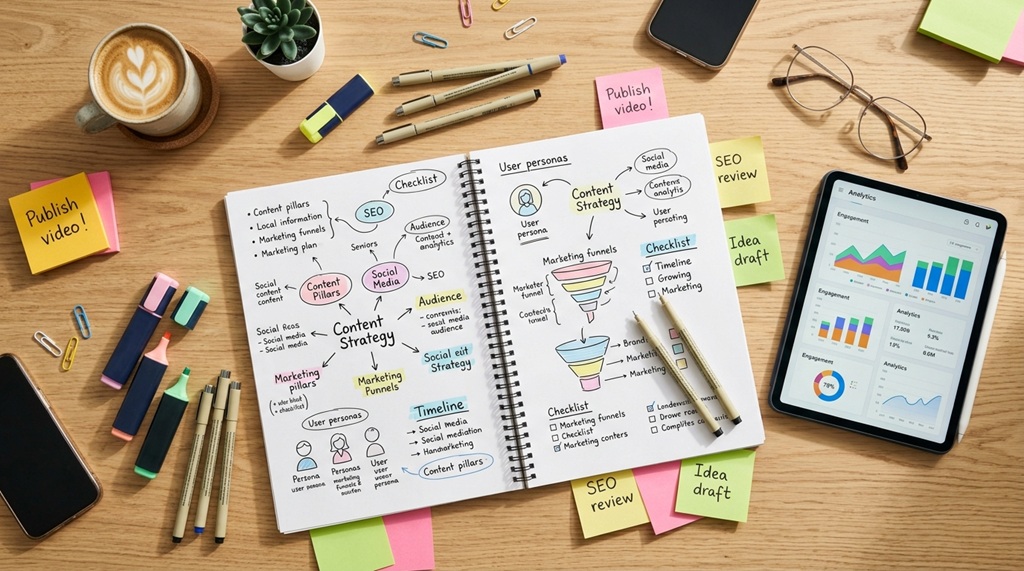
Careful editing turns a decent draft into a strong article. It removes clutter, fixes errors, and ensures the content is easy to find and read.
Edit in rounds
Do not try to fix everything at once. Edit in three short passes:
- Structure: Does each section answer a clear question? Is anything missing or repeated?
- Clarity: Can you shorten long sentences? Can you replace complex words?
- Polish: Check grammar, spelling, and punctuation.
Reading your draft out loud helps. You will hear awkward phrases and long sentences right away. If you stumble over a line, your reader will too.
Optimize without stuffing keywords
Use your main keyword in the title, the first paragraph, and at least one heading. Add related terms where they fit naturally. Do not repeat the keyword just to hit a number.
Write a meta description under 155 characters that includes the keyword and gives a reason to click. Add internal links to related posts and external links to trusted sources. These steps help both readers and search engines.
Format for every device
Most people read on their phones. Preview your article on a small screen before you publish. Check that images load fast, text is large enough, and lists display correctly.
In WordPress, use the correct heading levels. Use only H1, H2, and H3 to keep the hierarchy clean. A tidy structure helps readers, screen readers, and search engines understand your page.
Promote and Improve Your Content After Publishing
Publishing is only the first step. To grow readership, share your article widely and use data to improve it over time.
Share it where your audience lives
Promote each article in more than one place. Share it on LinkedIn, in email newsletters, and in relevant communities. Tailor the message to each channel instead of pasting the same text everywhere.
You can also turn one article into several formats. A key tip can become a short social post. A list can become a carousel. This stretches your effort and reaches more readers.
Track the right numbers
Check your analytics regularly. Useful metrics include page views, average time on page, scroll depth, and click-through rate from search. Each tells you something different.
If readers leave after the first paragraph, improve your opening. If your article ranks but few people click, rewrite the title and meta description. Small updates can lift results without a full rewrite.
Refresh older posts
Old content can still perform well when you keep it current. Update outdated tips, fix broken links, and add new examples. Then republish with a fresh “last updated” date.
Make this a habit. Review your top ten posts every few months. Search engines and readers both reward content that stays accurate and useful.
Frequently Asked Questions
How long should a blog post be to get more readers?
Length should match the topic and search intent. A simple question may need 800 words, while a detailed guide may need 2,000 or more. Focus on fully answering the question, not hitting a word count.
What makes people keep reading an article?
Readers stay when they find the answer fast and the text is easy to scan. Short paragraphs, clear headings, and useful examples all help. A strong opening also gives them a reason to continue.
How often should I publish new content?
Consistency matters more than volume. Pick a schedule you can keep, such as one quality post per week or every two weeks. A steady rhythm builds trust with readers and search engines.
How can I improve my writing skills quickly?
Write often and edit your own work with care. Read articles from strong writers in your field and notice how they structure ideas. Reading your drafts out loud also reveals weak spots fast.
Should I write for readers or for search engines?
Write for readers first. Search engines reward content that satisfies people. Once your draft is helpful and clear, add light optimization such as keyword placement, internal links, and a good meta description.
Conclusion
Mastering content writing for higher readership comes down to a few repeatable habits. Know your reader, answer their question quickly, and structure your article so it is easy to scan. Write in a simple, human voice, back your points with real examples, and edit before you publish.
Here is your practical takeaway. Pick one existing article today and rewrite its headline and first paragraph. Make the benefit clear and the answer direct. Then watch how readers respond, and apply what you learn to your next post.